Executive News Wire
Fact-first intelligence synthesized across 12+ news agencies. Zero sensationalism.
Live Wire
CHRONOLOGICAL WIRE DISPATCHES
Fact-first intelligence synthesized across 12+ news agencies. Zero sensationalism.
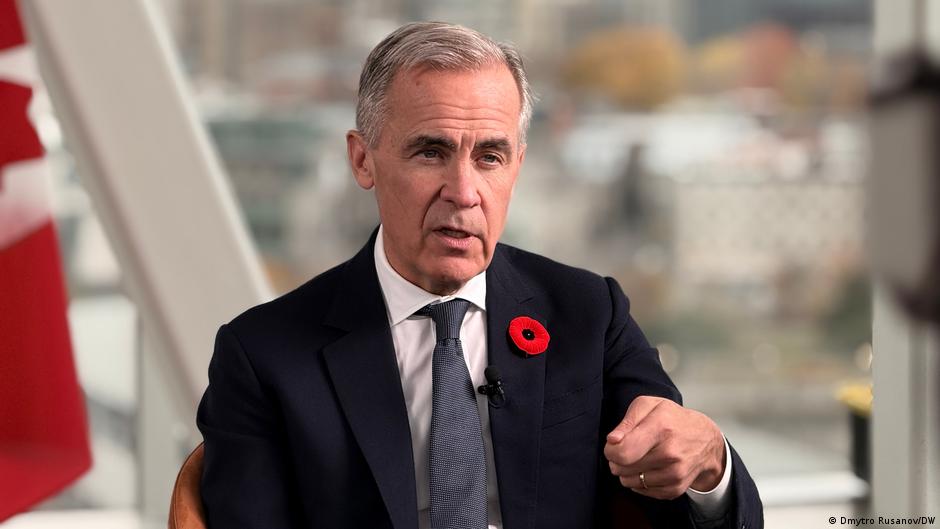
NEW DELHI [NCRBuzz Wire] — **Canadian Prime Minister Mark Carney has outlined a strategic push to diversify Ottawa's trade relations away from Washington by seeking deeper institutional integration with the European Union.** Speaking in an interview with international broadcaster DW, Carney addressed the pressing challenges of managing trade vulnerabilities, navigating geopolitical shifts under the administration of Donald Trump, and exploring novel diplomatic mechanisms such as an 'associate membership' framework with European allies despite initial hesitation from Berlin.
### Strategic Geopolitical Diversification
**Prime Minister Carney emphasized that overdependence on a single economic partner poses systemic vulnerabilities for middle powers in an increasingly fragmented global trade architecture.** The underlying motive behind Ottawa's proactive diplomatic pivot is to hedge against potential protectionist trade policies and tariff shocks emanating from the United States. By proposing an 'associate membership' model with the EU, Canada aims to secure privileged access to European markets, align regulatory standards, and fortify supply chain resilience for critical minerals and energy exports.
### Why It Matters: Indian Lens & Global Context
**For New Delhi, Canada's strategic realignment offers critical geopolitical parallels regarding trade diversification and strategic autonomy in managing major power dependencies.** Just as Ottawa seeks to insulate its domestic economy from over-reliance on the US market, New Delhi continually navigates a multi-alignment foreign policy—balancing strategic security ties with Washington while maintaining independent economic and energy engagements with diverse global partners like Russia, the EU, and West Asian economies. Both scenarios underscore how contemporary middle powers are compelled to restructure their external trade corridors to mitigate supply chain weaponization and sudden macroeconomic disruptions caused by shifting American political landscapes.
**Furthermore, this Canadian outreach mirrors domestic Indian debates on regulatory sovereignty and the complexities of negotiating comprehensive free trade agreements (FTAs) with Western blocs.** The fundamental root cause driving both nations is the imperative to protect domestic industries from external market shocks while securing reliable access to advanced technology, green energy financing, and critical raw materials. As global protectionism rises, the unfolding dynamic between North America and the EU provides a valuable analytical lens for Indian policymakers evaluating bilateral trade resilience and multilateral economic partnerships.
### What to Watch Next
**Observers will monitor formal European reactions, German diplomatic signaling, and subsequent bilateral trade negotiations between Ottawa and Brussels.** Analysts are particularly focused on whether the proposed 'associate membership' concept gains traction in upcoming multilateral forums, potentially setting a new template for non-European nations seeking deeper institutional integration with the EU single market.
Canada's historical trade heavily relies on the United States under the United States-Mexico-Canada Agreement (USMCA). Political shifts and protectionist rhetoric in North America have frequently prompted Ottawa to seek multilateral trade diversification with European and Indo-Pacific partners.
Get Instant Delhi-NCR Breaking Alerts on WhatsApp
Traffic advisories, AQI alerts, Metro disruptions, and verified local civic updates. No spam.
You have reviewed or dismissed all fresh dispatches.