Executive News Wire
Fact-first intelligence synthesized across 12+ news agencies. Zero sensationalism.
Live Wire
CHRONOLOGICAL WIRE DISPATCHES
Fact-first intelligence synthesized across 12+ news agencies. Zero sensationalism.
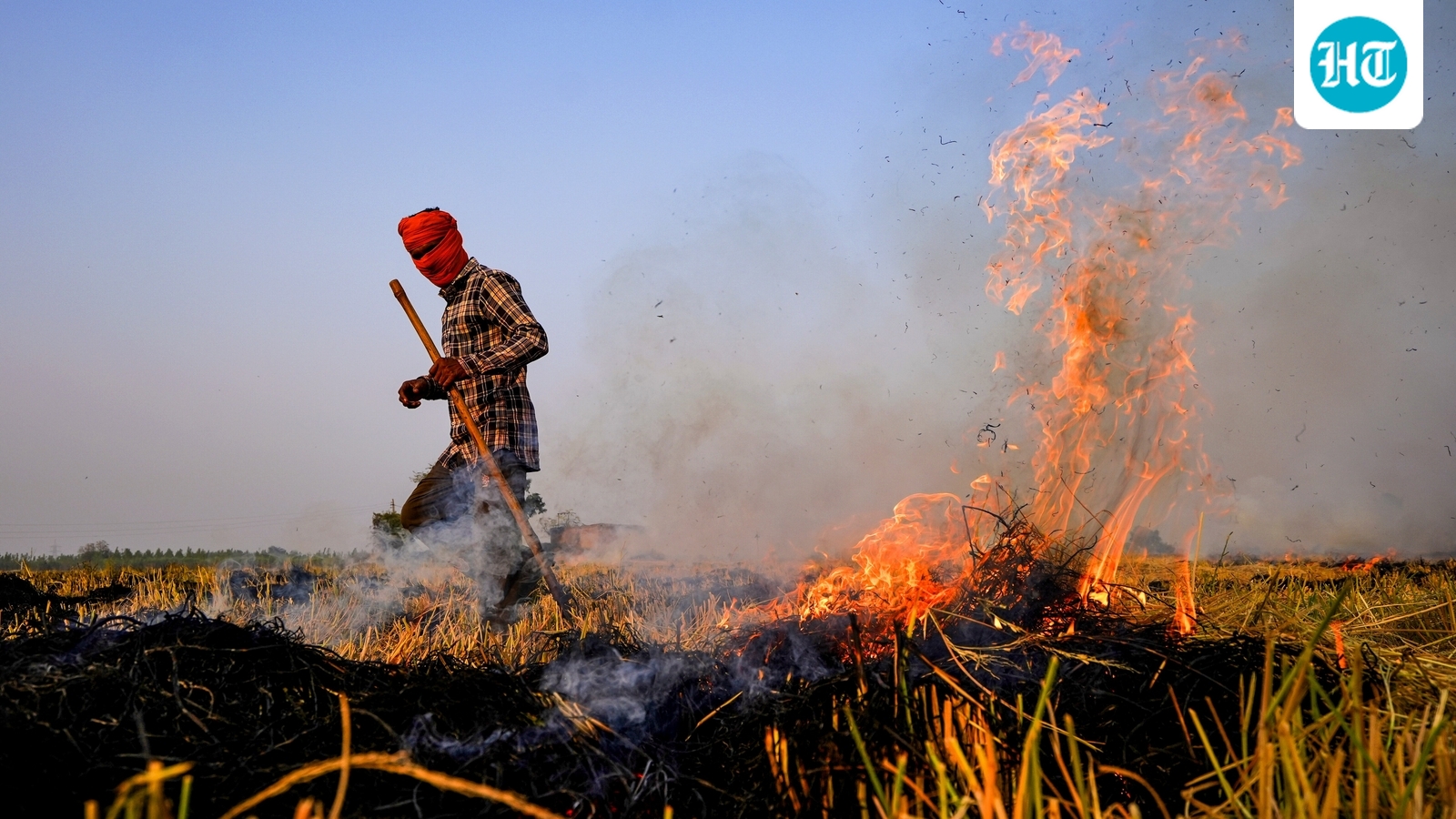
NEW DELHI [NCRBuzz Wire] — ### **NEW DELHI [NCRBuzz Wire] — Delhi's persistent struggle with hazardous smog has been linked to evening crop burning activities that routinely evaded detection by standard polar-orbiting satellites.**
**Data compiled from Indian meteorological monitoring systems indicate a sharp surge in stubble burning during the evening hours in the four days leading up to November 1.** Comparative analysis of nights with identical weather patterns demonstrated that Delhi's air quality remained significantly cleaner when evening agricultural fires were absent, proving that timing plays a critical role in regional pollution dispersion.
### **Regulatory Framework and Municipal Response Under CAQM and GRAP**
**The Commission for Air Quality Management in NCR and Adjoining Areas (CAQM) and municipal authorities have faced severe challenges in enforcing real-time curbs due to temporal gaps in satellite imaging.** Under the Graded Response Action Plan (GRAP) stages, municipal bodies in Delhi-NCR rely heavily on remote sensing data to deploy anti-smog guns, enforce dust control measures, and issue traffic diversions. However, the mismatch between peak burning schedules and satellite overpass timings has repeatedly hindered proactive administrative interventions.
### **Commuter Impact and Traffic Adjustments**
**Commuters across the National Capital Region experienced severely curtailed visibility and heightened health risks, prompting transit authorities to issue public advisories.** Public transport networks, including the Delhi Metro Rail Corporation (DMRC) lines and feeder buses, operated under reduced speed protocols during early morning hours to prevent accidents caused by low visibility. Municipal corporations and traffic police coordinated route diversions along major arterial entry points to curb vehicular congestion from compounding the ambient particulate matter.
### **Why It Matters: Urban Planning & Transit Perspective**
**Urban planners emphasize that effective air quality management requires synchronizing municipal enforcement with continuous, high-frequency geostationary monitoring rather than relying solely on scheduled polar satellite passes.** Without precise temporal data on agricultural residue burning, municipal authorities like the National Highways Authority of India (NHAI) and local transport departments struggle to calibrate emergency traffic measures and dust mitigation strategies effectively.
Delhi-NCR faces severe winter air pollution annually, driven by a combination of stubble burning in neighboring states, vehicular emissions, and unfavorable meteorological conditions. The Graded Response Action Plan (GRAP) and CAQM guidelines mandate phased restrictions based on Air Quality Index (AQI) thresholds.
Get Instant Delhi-NCR Breaking Alerts on WhatsApp
Traffic advisories, AQI alerts, Metro disruptions, and verified local civic updates. No spam.
You have reviewed or dismissed all fresh dispatches.