Executive News Wire
Fact-first intelligence synthesized across 12+ news agencies. Zero sensationalism.
Live Wire
CHRONOLOGICAL WIRE DISPATCHES
Fact-first intelligence synthesized across 12+ news agencies. Zero sensationalism.
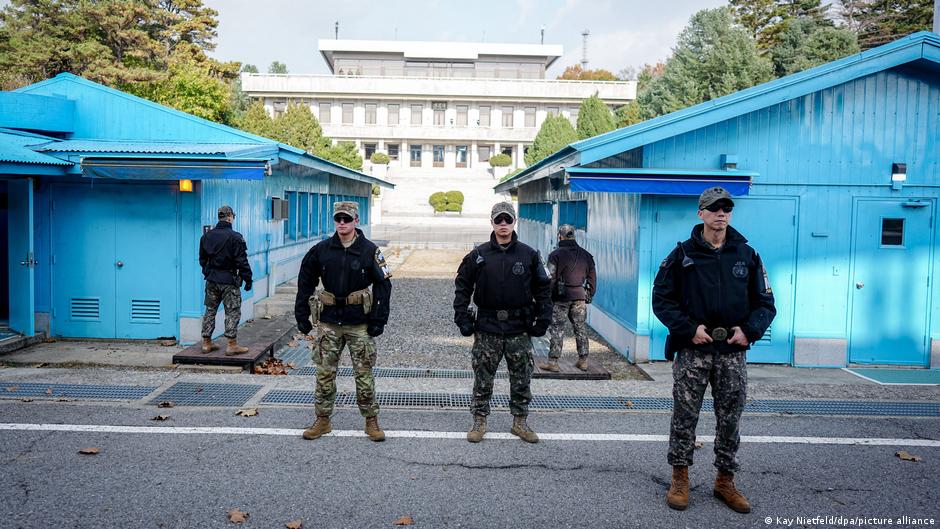
NEW DELHI [NCRBuzz Wire] — **NEW DELHI [NCRBuzz Wire] — Germany's Chancellor Merz recently advocated for a reunified Korean Peninsula during an international state visit, invoking historical comparisons to Germany's own reunification and prompting intense debate across global capitals regarding the viability of such a monumental geopolitical shift.** Drawing upon Germany's successful integration following the collapse of the Berlin Wall, the German leader argued that divided nations can overcome ideological barriers, though security analysts remain deeply skeptical about applying the European model to East Asia.
### Geopolitical Realities and Regional Friction
**The prospect of Korean reunification faces immense structural hurdles due to decades of entrenched political hostility, economic disparities, and heavily militarized borders maintained by Pyongyang and Seoul.** Unlike the Cold War-era division of Germany, which featured relative openness toward the end, the Demilitarized Zone (DMZ) dividing North and South Korea is one of the most fortified borders in the world, accompanied by a heavily armed nuclear standoff.
### Entity Spotlight: Chancellor Merz
**Chancellor Merz serves as the head of government for the Federal Republic of Germany, steering national policy on European integration and global alliances.** The office of the German Chancellor plays a pivotal role in shaping international diplomacy, trade treaties, and strategic security postures worldwide.
### Why It Matters: Indian Lens & Global Context
**For New Delhi, discussions surrounding partitioned nations, territorial sovereignty, and forced divisions carry profound strategic resonance given India's historical experience with partition and ongoing cross-border security challenges.** India closely monitors stability in the Indo-Pacific region, where any escalation on the Korean Peninsula directly impacts global shipping lanes, semiconductor supply chains, energy imports, and diaspora safety. Furthermore, parallels can be drawn to domestic debates in India surrounding national integration, federal governance, and the management of restive border regions, where state policy must constantly balance internal security with national cohesion.
**Global trade networks and energy transit routes through Asian choke points would experience severe volatility should the security architecture of the Korean Peninsula destabilize.** Just as domestic Indian policy debates frequently center on internal security, border management, and integration frameworks, international powers like Germany view divided territories through the prism of universal self-determination and human rights, creating a complex diplomatic chess match.
### What to Watch Next
**Diplomatic observers will closely track Seoul's official response, subsequent statements from foreign ministries in Washington and Beijing, and upcoming multilateral summits for shifts in regional security postures.** As economic pressures mount and alliances realign, international policy experts will evaluate whether Berlin's rhetorical push can translate into practical diplomatic frameworks for the Indo-Pacific.
Germany was divided into East and West Germany following World War II and reunited in 1990 after the collapse of the Soviet bloc. Conversely, the Korean Peninsula remains divided since the 1953 armistice, characterized by deep ideological hostility and one of the world's most militarized borders.
Get Instant Delhi-NCR Breaking Alerts on WhatsApp
Traffic advisories, AQI alerts, Metro disruptions, and verified local civic updates. No spam.
You have reviewed or dismissed all fresh dispatches.