Executive News Wire
Fact-first intelligence synthesized across 12+ news agencies. Zero sensationalism.
Live Wire
CHRONOLOGICAL WIRE DISPATCHES
Fact-first intelligence synthesized across 12+ news agencies. Zero sensationalism.
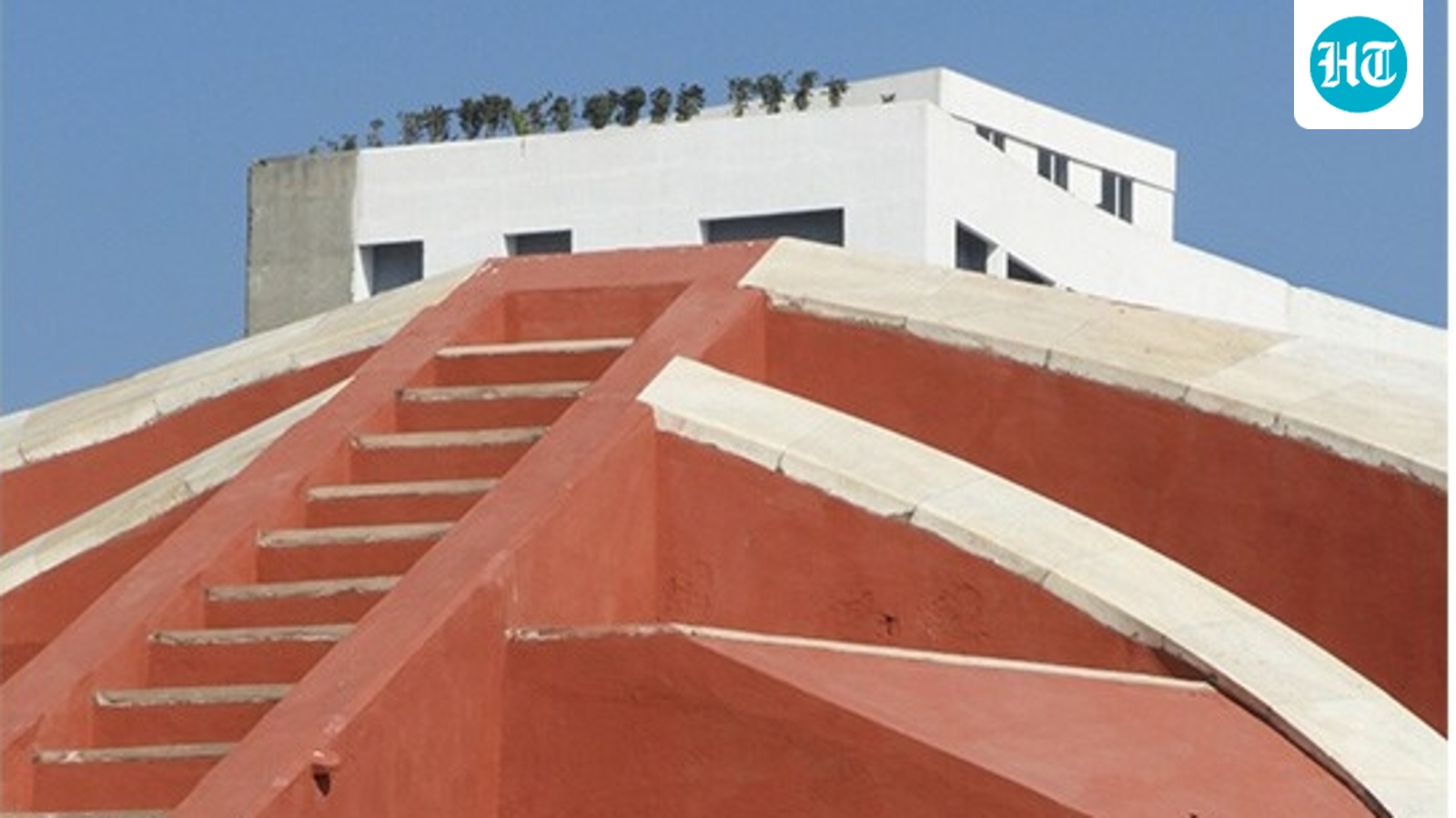
NEW DELHI [NCRBuzz Wire] — **Jantar Mantar in New Delhi represents a critical intersection of 18th-century scientific innovation and contemporary democratic expression, serving simultaneously as an architectural observatory and a designated zone for public demonstrations.** Commissioned by Maharaja Sawai Jai Singh II of Jaipur, the complex was meticulously designed to refine astronomical observations beyond the limitations of portable brass instruments like the astrolabe, utilizing massive masonry structures to track stellar movements with unprecedented empirical accuracy.
### Architectural Significance and Scientific Design
**The structural engineering of Jantar Mantar reflects an era of intense empirical inquiry, featuring permanent stone instruments engineered to withstand environmental degradation and calibration errors.** Maharaja Jai Singh II noted in historical accounts that traditional brass instruments suffered from flexure, wear, and graduation inaccuracies, prompting the construction of stationary, large-scale geometric edifices such as the Samrat Yantra, Jayapala Yantra, and Misra Yantra.
### Evolution as a Democratic Protesting Hub
**In the contemporary sociopolitical landscape, the precinct has transitioned into India's premier designated venue for civic demonstrations, labor strikes, and policy grievances.** **The ongoing demonstrations and assemblies at Jantar Mantar are driven by diverse stakeholder demands, ranging from legislative reforms and labor rights protections to environmental accountability and administrative redressal.** While security guidelines and National Green Tribunal (NGT) regulations restrict large-scale gatherings in central zones, Jantar Mantar remains legally sanctioned as a primary forum for citizens to exercise their fundamental freedom of speech and assembly under Article 19(1)(a) and Article 19(1)(b) of the Constitution of India.
### Key Instruments and Technical Metrics
| Metric / Aspect | Details |
|---|---|
| Commissioned By | Maharaja Sawai Jai Singh II |
| Year of Construction | Circa 1724 |
| Primary Purpose | Astronomical Calculation & Celestial Tracking |
| Modern Designation | Protected Monument & Permitted Demonstration Site |
| Governing Authorities | Archaeological Survey of India (ASI) / Municipal Corporation |
### Official Stance and Administrative Oversight
**Government authorities and law enforcement agencies maintain strict regulatory oversight over assemblies at the venue to balance public order with constitutional assembly rights.** Municipal bodies and local police coordinate with organizers to ensure that demonstrations comply with Supreme Court guidelines regarding noise pollution, traffic management, and public safety.
Constructed around 1724, Jantar Mantar reflects the scientific renaissance under Jaipur's ruler Maharaja Sawai Jai Singh II, who sought to rectify discrepancies in existing astronomical tables. Over centuries, the location transitioned from an imperial scientific site into New Delhi's primary democratic arena for public discourse and political accountability.
Get Instant Delhi-NCR Breaking Alerts on WhatsApp
Traffic advisories, AQI alerts, Metro disruptions, and verified local civic updates. No spam.
You have reviewed or dismissed all fresh dispatches.