Executive News Wire
Fact-first intelligence synthesized across 12+ news agencies. Zero sensationalism.
Live Wire
CHRONOLOGICAL WIRE DISPATCHES
Fact-first intelligence synthesized across 12+ news agencies. Zero sensationalism.
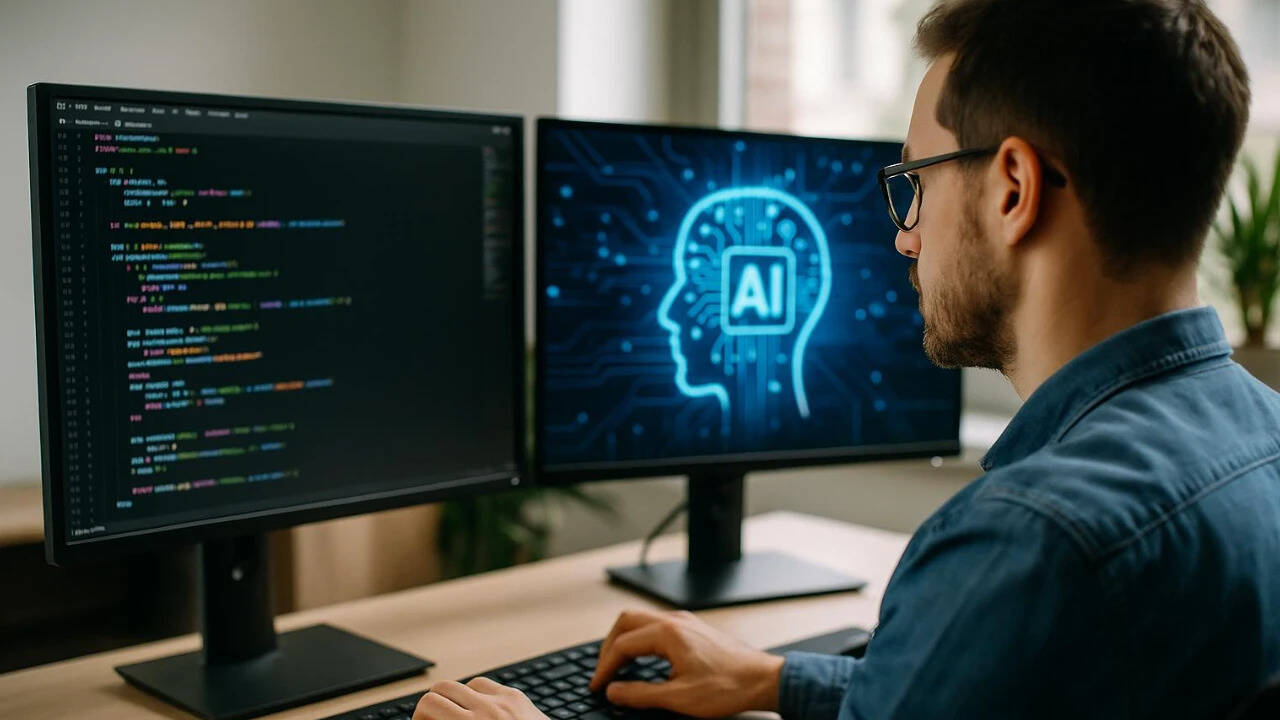
NEW DELHI [NCRBuzz Wire] — **BENGALURU [NCRBuzz Wire] — India's technology sector is undergoing an unprecedented architectural realignment as generative artificial intelligence models and automated code generation tools replace traditional entry-level software engineering roles.** Citing data highlighted in recent analyses of higher education trends, engineering enrolments across Indian institutions have expanded by 47% over a four-year period, creating an immense surplus of graduates seeking traditional IT services employment. However, net technology sector job additions have plummeted by approximately 70%, exposing a severe structural decoupling between academic output and enterprise demand in primary tech hubs like Bengaluru, Hyderabad, and Pune.
### Silicon & LLM Parameter Shifts Driving Recruitment Cuts
**The root cause of this contraction lies in the rapid enterprise deployment of large language models and advanced LLM parameters that automate boilerplate coding, debugging, and software testing tasks previously assigned to junior developers.** Major technology firms and multinational corporations operating in Silicon Valley and Bengaluru are reallocating capital investments toward high-performance silicon hardware nodes, specialized AI accelerators, and cloud infrastructure, while simultaneously suppressing entry-level headcounts. Enterprise engineering leadership is prioritizing developers with specialized expertise in machine learning systems, model fine-tuning, and cybersecurity vulnerability management—such as mitigating critical CVEs—rather than generalist graduates fluent only in legacy programming stacks.
### Developer Utility, Enterprise Deployments, and Cybersecurity Implications
**Developer productivity multipliers driven by AI tooling have effectively reduced the sheer volume of fresh human resources required to deliver enterprise software solutions.** While senior architects leverage AI agents to accelerate deployment lifecycles, this dynamic creates a widening experience gap for junior professionals who miss out on foundational coding milestones. Furthermore, automated code generation introduces distinct cybersecurity challenges, occasionally embedding unvetted vulnerabilities or logic flaws into production codebases if rigorous human oversight and static analysis guardrails are absent.
### Why It Matters: Ecosystem Transformation & Career Redefinition
**The collapse in net tech job additions while enrolments surge forces a radical re-evaluation of the middle-class Indian career dream, prompting students, educators, and policymakers to diversify skill sets.** The traditional linear trajectory from a Tier-3 engineering college directly into a mass-recruiting IT services firm is no longer economically viable due to automation economics and shifting hardware-software co-design paradigms. Stakeholders must now embrace continuous upskilling in high-value domains, interdisciplinary technical education, and potentially reconsider high-skill blue-collar and specialized technical trades that resist immediate AI substitution.
Historically, India's economic liberalization spawned a massive IT services industry that absorbed millions of engineering graduates through mass-recruitment models. The rapid maturation of generative AI, large language models, and automated developer tools has structurally disrupted this traditional employment pipeline, necessitating a shift toward high-value engineering and specialized silicon competencies.
Get Instant Delhi-NCR Breaking Alerts on WhatsApp
Traffic advisories, AQI alerts, Metro disruptions, and verified local civic updates. No spam.
You have reviewed or dismissed all fresh dispatches.