Executive News Wire
Fact-first intelligence synthesized across 12+ news agencies. Zero sensationalism.
Live Wire
CHRONOLOGICAL WIRE DISPATCHES
Fact-first intelligence synthesized across 12+ news agencies. Zero sensationalism.
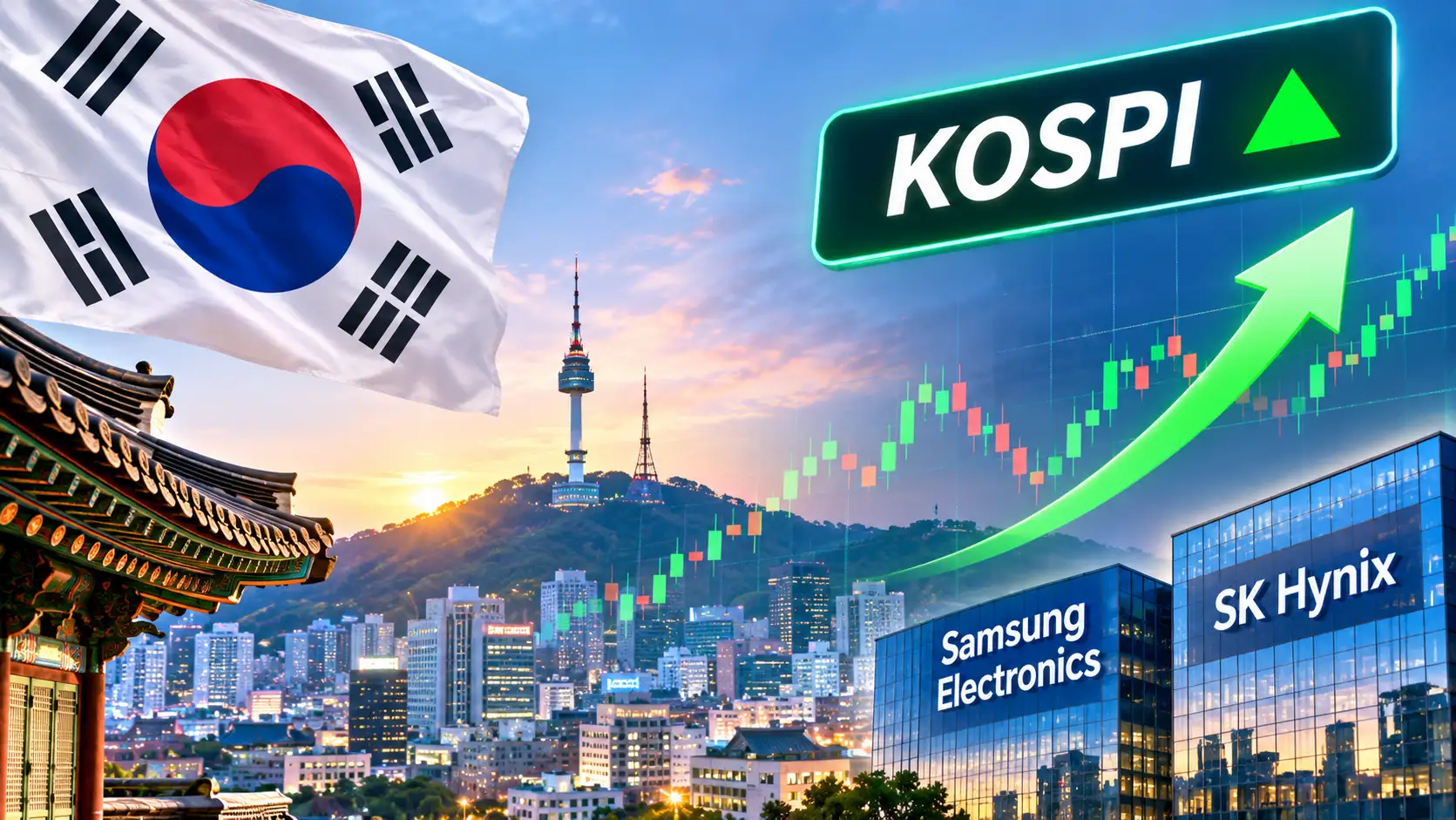
NEW DELHI [NCRBuzz Wire] — **South Korean shares staged a notable market rebound on Friday, reversing early session losses as robust export metrics triggered aggressive dip-buying among institutional and retail investors navigating recent KOSPI market fluctuations.** Financial markets observed a recovery driven by fundamental trade data rather than speculative momentum, easing concerns stemming from broader regional equities volatility.
### Fiscal & Market Performance Metrics
| Financial Metric / Indicator | Period / Status | Quantitative Reading | Market Impact & Implication |
|------------------------------|------------------|----------------------|-------------------------------|
| **Export Growth Trajectory** | October Reading | Nearly Doubled (50-Yr High) | Triggers upward revisions in corporate earnings forecasts |
| **Factory Activity Expansion**| 8-Month Period | Slowest Pace in 8 Months | Highlights manufacturing sector headwinds |
| **Market Sentiment Index** | Post-Open Session| Rebound from Early Losses | Driven by aggressive dip-buying on KOSPI |
**Export performance served as the primary catalyst for the equity market recovery, with outbound shipments nearly doubling in October to record their highest increase in over half a century.** Analysts note that this unprecedented trade expansion provides a fundamental cushion against softening domestic manufacturing indices, signaling strong external demand for key technology and industrial goods.
**Corporate earnings forecasts are anticipated to undergo upward revisions across major export-oriented conglomerates as sustained overseas demand offsets domestic headwinds.** However, macroeconomic monitors point out that the expansion of factory activity slowed to an eight-month low, indicating a divergent recovery pattern between external trade volumes and internal industrial output.
### Why It Matters: Indian Lens & Global Context
**For Indian financial markets and macroeconomic observers, the South Korean trade dynamics offer critical parallels regarding export-led recovery models amid global supply chain adjustments.** India's own manufacturing and export sectors, particularly in electronics and engineering goods, closely track East Asian trade cycles to gauge global demand resilience and foreign institutional investor (FII) capital allocation trends.
**The interplay between record export expansion and moderating factory activity mirrors domestic challenges faced by emerging economies, where external trade resilience often decouples from localized industrial output.** As global monetary policies shift and trade corridors adapt, policymakers in both Seoul and New Delhi are closely monitoring how export earnings impact currency stability, bond yields, and domestic corporate profitability.
South Korea's export-driven economy relies heavily on semiconductor, automotive, and heavy industrial shipments. Historically, surges in external trade volume have acted as primary buffers against domestic consumption slowdowns, directly influencing regional Asian equity flows and FII allocation patterns.
Get Instant Delhi-NCR Breaking Alerts on WhatsApp
Traffic advisories, AQI alerts, Metro disruptions, and verified local civic updates. No spam.
You have reviewed or dismissed all fresh dispatches.