Executive News Wire
Fact-first intelligence synthesized across 12+ news agencies. Zero sensationalism.
Live Wire
CHRONOLOGICAL WIRE DISPATCHES
Fact-first intelligence synthesized across 12+ news agencies. Zero sensationalism.
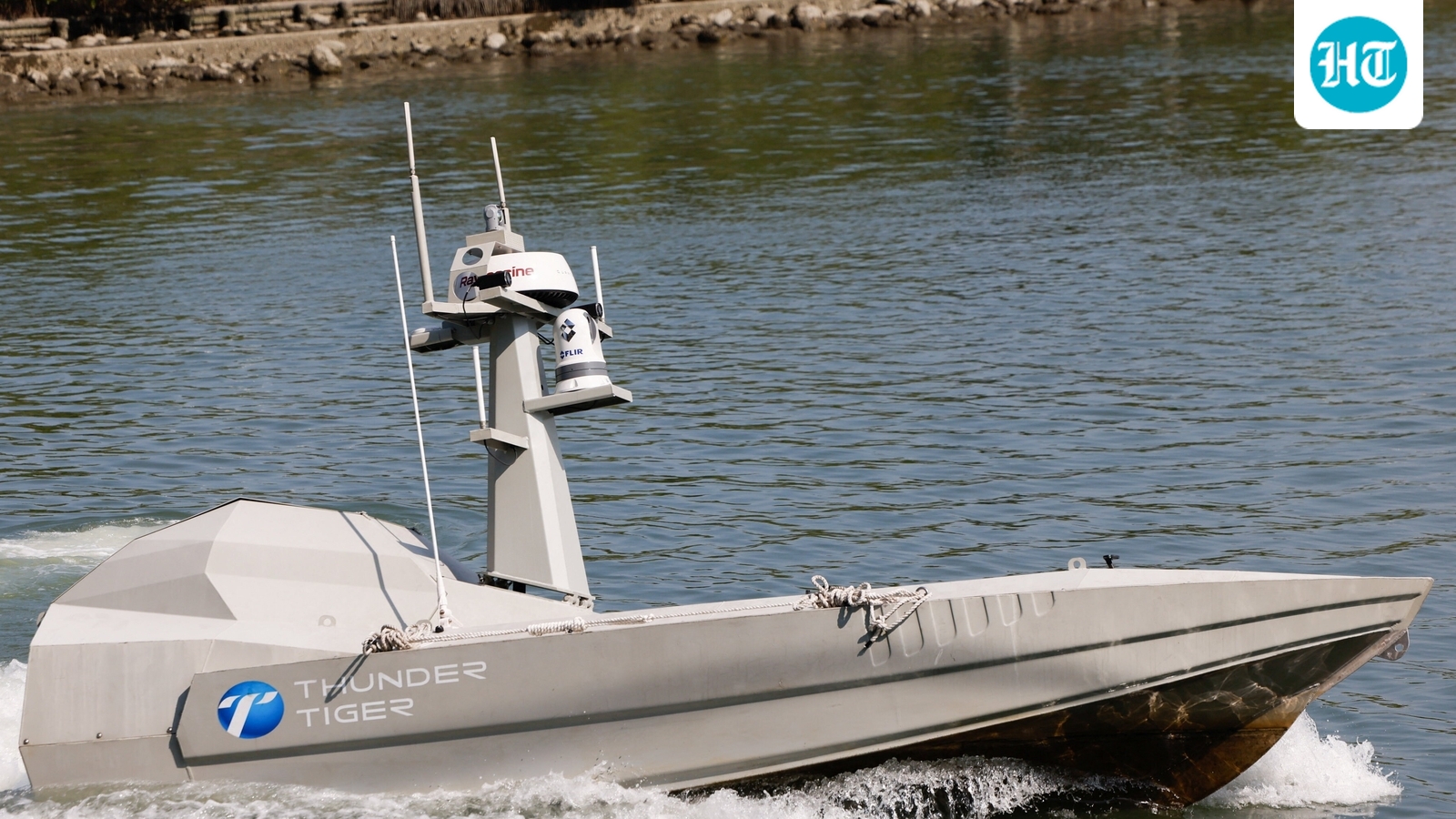
NEW DELHI [NCRBuzz Wire] — Taiwan is investing billions of dollars in procuring and developing advanced aerial and sea drones to establish a robust asymmetric defense deterrent against potential incursions by the People's Republic of China. **The strategic pivot toward unmanned systems follows devastating combat demonstrations of naval and aerial drones in active conflict zones such as Ukraine and the Strait of Hormuz.** By leveraging cost-effective autonomous platforms, Taipei aims to neutralize larger conventional naval fleets without risking extensive human personnel. Global defense manufacturers, particularly from Western nations, are increasingly engaging with Taiwanese state agencies and private tech firms to co-develop secure, jam-resistant military hardware.
### Why It Matters: Indian Lens & Global Context
**From the Indian geopolitical vantage point, Taiwan's rapid pivot to unmanned asymmetric warfare offers direct strategic lessons for safeguarding critical maritime choke points in the Indian Ocean Region.** As New Delhi monitors escalating tensions across the Indo-Pacific, India's naval planners are closely evaluating the efficacy of swarming drone technologies to counter numerically superior adversaries in contested waters like the Bab el-Mandeb and the Strait of Malacca. Furthermore, disruptions in the Taiwan Strait directly threaten global semiconductor supply chains, impacting India's domestic electronics manufacturing ecosystem and tech hardware imports.
**Domestically, this global push toward unmanned military hardware parallels India's own defense indigenization drive under the Atmanirbhar Bharat initiative, specifically through programs like Innovations for Defence Excellence (iDEX) and Project Kusha.** Just as Taiwan is incentivizing private tech startups to build resilient defense tech, India's Ministry of Defence is aggressively funding domestic firms to manufacture loitering munitions, autonomous underwater vehicles (AUVs), and reconnaissance drones. Both nations face similar geopolitical imperatives: countering heavily armed regional rivals while simultaneously shifting from foreign dependency to domestic defense manufacturing capabilities.
Taiwan's military modernization has increasingly focused on the 'porcupine' strategy, emphasizing distributed, mobile, and asymmetric capabilities to resist a potential amphibious invasion across the Taiwan Strait.
Get Instant Delhi-NCR Breaking Alerts on WhatsApp
Traffic advisories, AQI alerts, Metro disruptions, and verified local civic updates. No spam.
You have reviewed or dismissed all fresh dispatches.