Executive News Wire
Fact-first intelligence synthesized across 12+ news agencies. Zero sensationalism.
Live Wire
CHRONOLOGICAL WIRE DISPATCHES
Fact-first intelligence synthesized across 12+ news agencies. Zero sensationalism.
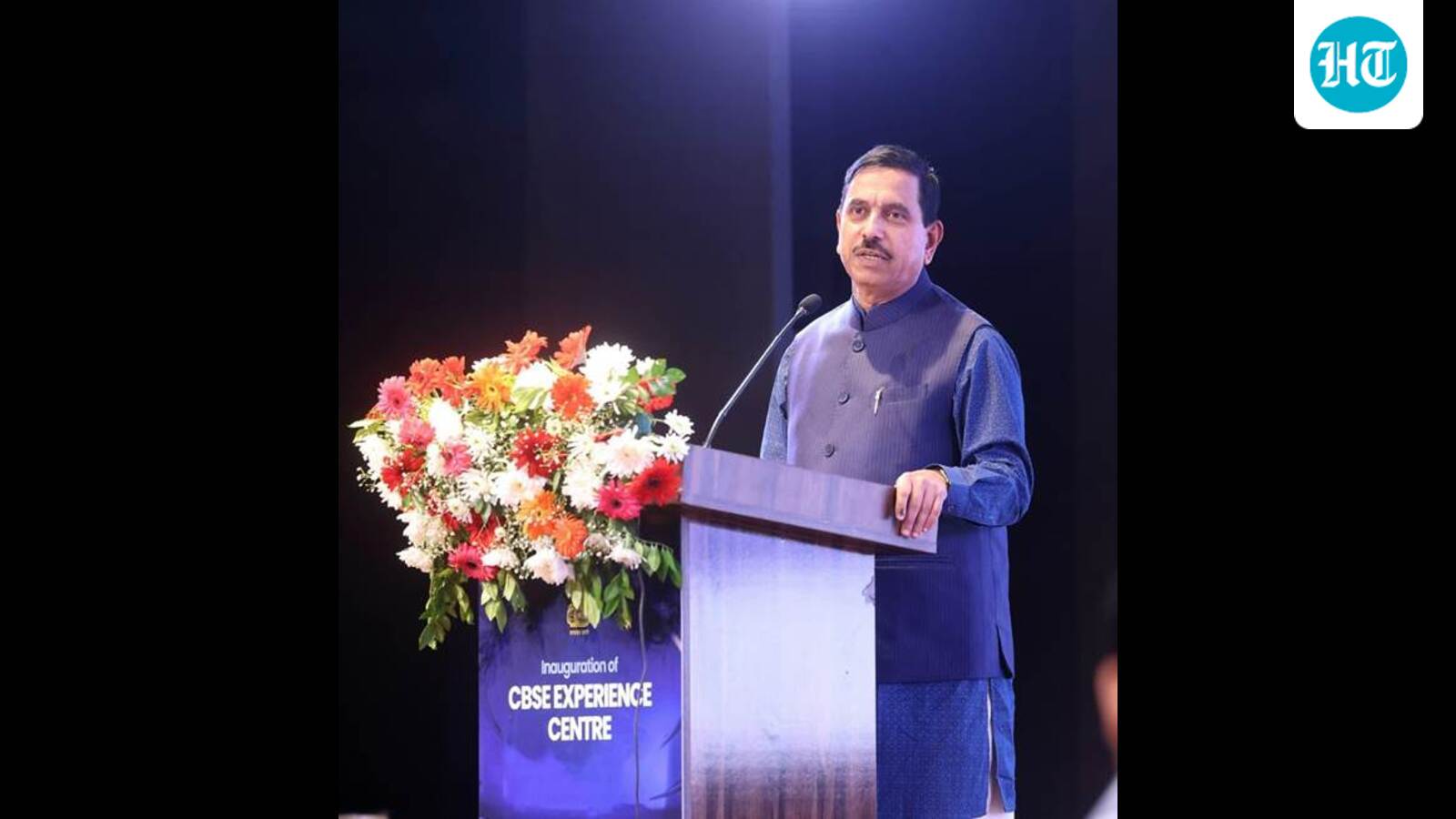
NEW DELHI [NCRBuzz Wire] — ### NEW DELHI [NCRBuzz Wire] — Union Education Minister Prahlad Joshi has formally criticized the growing 'marksvaadis' culture, warning that an obsession with examination scores is undermining student self-confidence. The Minister made these remarks during the inauguration of the Central Board of Secondary Education (CBSE) Experience Centre at its headquarters in New Delhi.
### Addressing the Rote Learning Crisis
**The Minister highlighted that the current academic environment prioritizes rote learning over genuine understanding, which stifles creativity.** By focusing exclusively on high marks, the education system inadvertently creates a high-pressure environment that discourages critical thinking and problem-solving skills. Joshi noted that this 'marksvaadis' mindset—a term he coined to describe the obsession with marks—is a significant barrier to the holistic development of students across the country.
### Policy Shift Toward Experiential Learning
**The launch of the CBSE Experience Centre serves as a strategic move to pivot the national curriculum toward experiential and practical learning.** This initiative aims to provide students with hands-on exposure to subjects, moving away from traditional textbook-heavy methodologies. The Ministry of Education intends to integrate these experiential modules to ensure that students are better prepared for real-world challenges rather than just competitive examinations.
### Why It Matters: Indian Lens & Global Context
**The critique of the Indian examination system reflects a broader global debate regarding the efficacy of standardized testing versus skill-based education.** In India, the intense competition for university admissions often forces students into a cycle of coaching and memorization, a phenomenon that has been linked to rising mental health concerns among adolescents. This policy push aligns with the National Education Policy (NEP) 2020, which seeks to overhaul the pedagogical framework to prioritize conceptual clarity.
**Globally, nations like Finland and Singapore have successfully transitioned toward competency-based assessment models, providing a template for India's current educational reforms.** The Indian government is attempting to replicate these successes by reducing the weightage of high-stakes exams and introducing continuous, comprehensive evaluation. This shift is critical as India aims to build a workforce capable of navigating the complexities of the 21st-century digital economy.
The Indian education system has historically been criticized for its reliance on high-stakes board examinations, which often dictate university admissions and career trajectories. The National Education Policy (NEP) 2020 was introduced to address these systemic issues by promoting multidisciplinary learning and reducing the burden of rote memorization.
Get Instant Delhi-NCR Breaking Alerts on WhatsApp
Traffic advisories, AQI alerts, Metro disruptions, and verified local civic updates. No spam.
You have reviewed or dismissed all fresh dispatches.